Every spring in Mauldin, we start getting calls from homeowners who have been watching a trail of ants move across a kitchen counter for two weeks, tried three different sprays, and are not sure what they did wrong. Usually they did not do anything wrong; they just hit the ants they could see without reaching the colony behind them. This blog covers what is actually happening when ants take up residence in a Mauldin home: which species cause the most damage, what professional extermination costs and why, how we protect pets during treatment, and the specific signs that tell you it is time to stop treating yourself and call in an ant exterminator.
Ants Common in Mauldin Homes
Mauldin’s mix of older neighborhoods, mature trees, and the kind of humidity that settles in from April through October creates ideal conditions for several ant species. What makes this area particularly tricky is that two of the most common ants, fire ants and carpenter ants, require completely different treatment approaches. Lumping them together or guessing wrong on the species is one of the main reasons homeowner treatments stall out.
Carpenter Ants and the Damage They Do
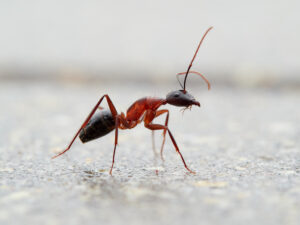
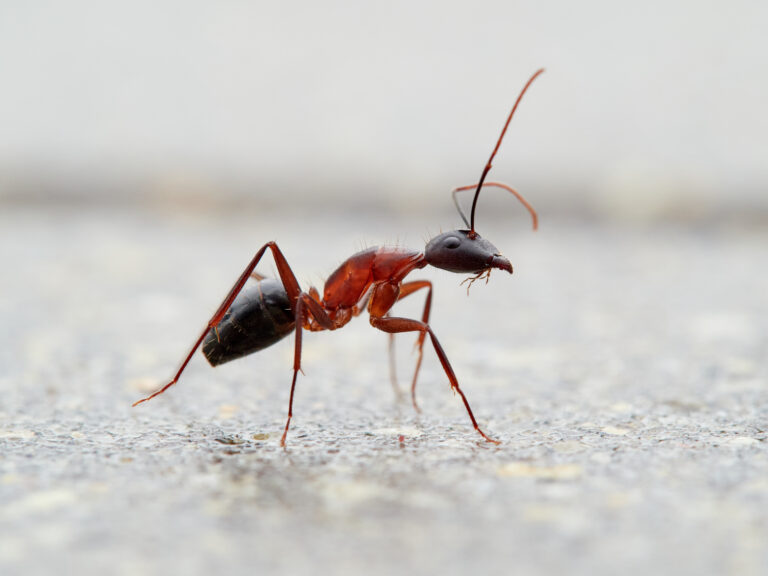
Carpenter ants are easiest to spot in the evening. They are large, typically black, and they forage at night. If you are seeing big ants moving along baseboards or windowsills after dark, that is a reasonable indication you have carpenter ants rather than a smaller sugar ant species.
The damage they cause happens slowly and out of sight. Carpenter ants do not eat wood; they hollow it out to nest inside it, which weakens structural lumber, door frames, and the wood framing around crawl space vents over time. They are drawn to wood that has already been softened by moisture, so a crawl space with any humidity problem is a frequent starting point. According to Clemson University Extension, carpenter ants are among the primary wood-destroying insects in South Carolina and can establish satellite colonies throughout a structure once they find a suitable entry point.
Four signs that point specifically to carpenter ants rather than other species:
- Frass near wood surfaces: fine sawdust-like material that accumulates near baseboards, door frames, or crawl space openings
- Large black ants active indoors at night, especially moving along walls or toward moisture sources
- A faint rustling or tapping sound inside walls or hollow wood, most noticeable in a quiet room
- Wood that sounds hollow when tapped, particularly around window frames, sill plates, or exterior door frames
Pet Safe Options for Your Family
Homes with dogs and cats require some extra planning around treatment, but it does not mean choosing between effective ant control and keeping your animals safe. The key is in how and where products are applied. We concentrate the heaviest treatment on the exterior foundation, where most ant activity originates, and use targeted applications inside rather than broadcast sprays across living areas.
Gel baits are particularly useful in pet households. They are placed in contained spots where ants are foraging, not across open surfaces where a dog or cat would contact them. Re-entry times after interior treatment are real and should be followed; we give you specific guidance on when the job is done, including any precautions for your particular animals.
The practices that matter most for pet safety during and after ant treatment:
- Concentrating treatment on the exterior foundation rather than broadcasting indoors
- Using gel baits in targeted locations rather than surface sprays in pet areas
- Keeping pets out of treated areas until product has fully dried
- Following technician re-entry instructions specific to interior applications in your home
How Exterminators Get Rid of Ants
The gap between what a spray bottle does and what professional ant extermination does comes down to one thing: reaching the colony. A repellent product applied along a baseboard can redirect ant traffic, but it does not eliminate the source. In some cases, repellents cause a colony to split into multiple satellite locations, which makes the infestation harder to resolve, not easier.
When to Call a Mauldin Exterminator
Two weeks of consistent ant activity indoors despite treatment is a reliable cutoff. If you are still seeing ants after that, the colony is established in or very near the structure and is not going to respond to surface-level treatment. Carpenter ants specifically should prompt a call earlier because of the structural implications; waiting an extra month while trying another over-the-counter option is not worth the wood damage that may accumulate in the meantime.
Our process starts with species identification and locating the colony or, at minimum, mapping the entry points and foraging paths. From there, we apply treatment based on what we actually find: baiting programs that workers carry back to the colony, exterior barrier applications around the foundation and access points, and targeted interior spot treatments where activity is concentrated. You can read more about what a full service visit covers on our Residential Pest Control page.
For carpenter ants, we also assess the moisture conditions that likely drew them in. Treating the colony without addressing a crawl space humidity issue or a leaking sill plate tends to result in a return call six months later. Our blog on why ant control matters goes deeper on what gets missed when infestations are treated without a full inspection.
One practical note: winged ants swarm in spring and are frequently mistaken for termite swarmers. If you are seeing winged insects and are not sure which you have, our post on winged carpenter ants versus subterranean termites walks through how to tell the difference before you call.
Call Scout’s for Ant Control Mauldin
If ants are active in your Mauldin home and you are ready to get this handled, call us at 1-864-469-4999 or use our contact page to schedule. We offer free inspections and back every job with a 100% money-back guarantee.
We serve homeowners throughout the Upstate, including:
- Anderson, SC
- Belton, SC
- Clemson, SC
- Duncan, SC
- Easley, SC
- Five Forks, SC
- Fountain Inn, SC
- Gray Court, SC
- Greenville, SC
- Greer, SC
- Iva, SC
- Laurens, SC
- Lyman, SC
- Mauldin, SC
- Oconee County, SC
- Pickens, SC
- Piedmont, SC
- Simpsonville, SC
- Six Mile, SC
- Spartanburg, SC
- Taylors, SC
- Townville, SC
- Travelers Rest, SC
- Williamston, SC
- Woodruff, SC