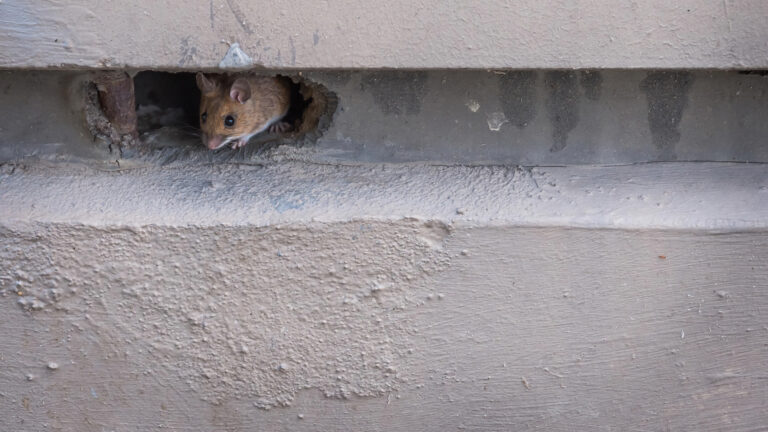
Mice in the walls are hard to get rid of on your own because the nest sits out of reach between the studs, and new mice keep coming in through gaps that are easy to miss. First, confirm it is mice: listen for light scratching right after dark, then look for dark droppings the size of a rice grain along the baseboards. Then have a Scout’s Pest Control company inspect the house inside and out. A professional finds every way in, from the crawl space to the edge of the roof, seals those gaps with material mice cannot chew through, removes the mice already inside, and comes back to confirm they are gone. Skip store-bought poison: a mouse that eats it often dies inside the wall, where you cannot reach it.
Hearing Scratching Inside Your Walls at Night? Here’s Why
Most people first notice it around 10 p.m. The TV goes off, the house goes quiet, and there it is behind the drywall: a light, quick scratching that stops the second you knock and picks back up five minutes later. Mice feed hardest in two stretches: right after dusk and again just before dawn.
Mice weigh less than an ounce, so what comes through the drywall is scratching and a fast skittering with no weight behind it. Rats thump. Faint, fast, and only after dark almost always means mice.
Signs of Mice in the House Worth Checking
Droppings settle it faster than anything else, and you do not need to open a wall to find them. A single mouse can leave 50 or more a day as it travels, so they pile up along the routes it already uses.
- Dark droppings about the size of a rice grain, pointed at both ends, scattered along baseboards and behind low cabinets.
- Look for a grey, greasy smudge where the wall meets the floor. Mice see poorly and run the same path every night until the oil in their fur marks it.
- Shredded paper, fabric, or fluffed-out insulation pulled into a corner under a sink or in the back of a closet.
- If the dog keeps planting himself at one spot along a wall and will not be talked out of it, believe the dog.
A wall with an established nest behind it also picks up a stale, musty ammonia smell. If a closed-up guest bedroom smells wrong every time you open the door, check the baseboards in there before you blame the carpet.
How to Tell If You Have Mice or Rats
Size is the shortcut. A house mouse is about as long as your thumb, with a thin tail the same length again, and it fits through a gap the width of a pencil. A roof rat is five to ten times heavier and needs an opening about half an inch wide. Their droppings look different: mouse droppings are rice-grain small and pointed, while rat droppings are closer to a raisin with blunt ends.
Behavior splits them too. Mice are curious and will check out anything new in their path the first night, while rats steer clear of unfamiliar objects for days. We covered rat entry points separately in How Rats Get Into Your Home.
How Mice Get Into Your Walls
Crawl spaces are the usual way in around here. A mouse gets under the house through a torn vent screen or a gap where the base of the house meets the ground, then follows the plumbing and wiring straight up into the wall.
Mice don’t just come in through crawl spaces. They can also squeeze in through:
- Gaps where the AC line, dryer vent, cable line, or outdoor faucet passes through the siding.
- A worn or flattened rubber seal along the bottom of the garage door, or a missing sweep under an exterior door.
- Gaps under the roof overhang that mice can reach by climbing brick and rough siding.
Once they’re in the garage or attic, mice follow pipes and wiring into your walls.
What pulls them toward those openings is mostly food and cover. Mice eat the seed from bird feeders. Pet food left out in the garage is another easy meal. Bushes and firewood stacked tight against the siding give them a covered path to the house. Once October nights cool off, mice outside start looking for a warm place to nest.
Why a Mouse Nest in the Wall Is Hard to Handle Yourself
Mice in the walls don’t stay in one wall. The spaces inside your walls connect to the attic, the crawl space, and the gaps behind cabinets and appliances, so a mouse you hear in the bedroom wall at night can be in the kitchen an hour later. Here’s what makes them hard to handle on your own:
- You can’t tell where they’re nesting. Mice build nests out of shredded insulation, cardboard, and dryer lint in warm, hidden spots: near dryer vents, in water heater closets, behind kitchen cabinets where pipes run, and up in the attic. The scratching tells you where a mouse is passing through, not where it lives. Opening up a wall to look for the nest doesn’t fix anything, because the mice just keep moving through the rest of the house.
- They multiply quickly. A female mouse raises five or six young at a time, can breed again within a day of giving birth, and those young are ready to breed at about five weeks old. Two mice in early October are a different number by Thanksgiving.
- One missed gap undoes the rest. A mouse fits through an opening about a quarter inch wide, and the gaps that matter most are the hardest to find: in the crawl space, behind the AC line, or up under the roof overhang. Seal the obvious holes and leave one, and the mice keep using it. Seal the outside while mice are still in the house, and the ones already inside keep breeding and keep showing up in new rooms.
- Store-bought fixes tend to backfire. Expanding foam on its own gets chewed through, and steel wool rusts out. Poison is worse. A mouse that eats bait in the attic or crawl space can crawl into a wall and die there, and the smell comes through for weeks with no easy way to reach it.
How to Get Rid of Mice in Walls
Getting mice out of a wall for good takes two jobs done together: closing every entry point and removing the mice already inside, then checking that it worked. Here is how our residential pest control service handles it:
- Inspect inside and out. We find which walls the mice are using and every place they are getting in through the crawl space and around the ground level of the house.
- Seal the entry points. We seal gaps around pipes, wires, vents, and doors with materials mice cannot chew through, so new mice cannot replace the ones inside.
- Remove the mice still in the house. This stops the nest behind the drywall from producing the next litter.
- Come back and check. Follow-up visits confirm the activity has stopped, and we build them into the plan rather than billing them as extras.
Older homes on block foundations in Easley, Anderson, and Simpsonville give mice the easiest way under the house, and we see the same crawl-space-to-wall pattern in all three every fall.
How to Keep Mice Away From Your House
A few habits make the house less inviting and help the work last:
- Keep pet food and birdseed in sealed plastic or metal bins.
- Move firewood off the ground and away from the house, and trim shrubs back from the siding.
- Replace worn sweeps on exterior doors and a cracked seal along the bottom of the garage door.
Why Call Scout’s Pest Control
We have been family-owned here in the Upstate since 2012 and have been named Best Pest Control Company in the Upstate for several years running. Every treatment is pet-centric, so the dog that has been staring at your baseboard for two weeks isn’t at risk from the work, and every service comes with a 100% money-back guarantee. If you hear scratching in the walls, call us at 864-469-4999 before the weather pushes more inside.
Serving Greenville and communities across the Upstate: