

The quickest way to tell them apart is by size and where they show up. Carpenter ants are noticeably bigger and nest inside wood, chewing tunnels instead of eating the wood itself. Fire ants are much smaller and build mounds in open, sunny soil instead. The difference that matters most is what happens if you disturb them: fire ants sting in numbers, while carpenter ants can only bite, and rarely do. A burning, itchy sting means fire ants, not carpenter ants.
How to Tell a Fire Ant from a Carpenter Ant
A homeowner in Simpsonville calls us about giant black ants taking over a windowsill. Ten minutes later, someone in Mauldin calls about a mound that got built seemingly overnight, right in the path of the lawnmower. Both calls come in every August, and both callers usually open with the same line: “I don’t know if this is a big deal or not.”
Telling a fire ant from a carpenter ant in South Carolina matters more than it looks, especially once fire ant season and carpenter ant swarm activity overlap in late summer. From a few feet away, both are just “ants in the yard.” Up close, they’re built differently, they nest in completely different places, and the risk each one poses to your home isn’t remotely the same.
Fire Ant vs. Carpenter Ant: Size and Color
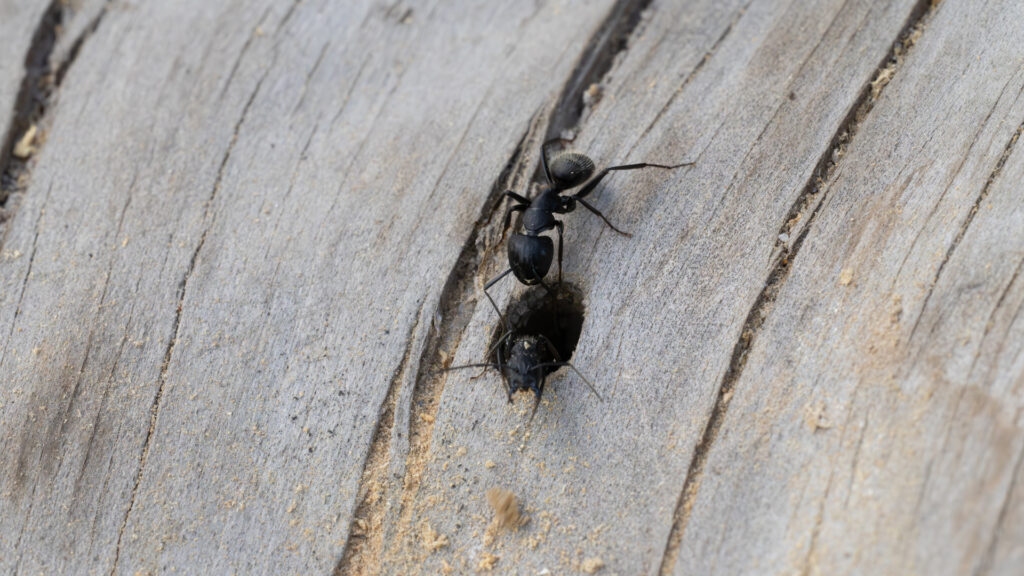

Line up a carpenter ant next to a fire ant and size is usually the fastest way to tell them apart. Carpenter ants are big enough to spot the second they cross a windowsill, and the queen is even bigger. They’re solid black, dark brown, or a black-and-red combination, and the waist has one smooth, evenly rounded bump rather than a sharp pinch.
What a Fire Ant Looks Like Up Close
Fire ants are noticeably smaller across the board. Ants in the same colony vary in size, but they’re small enough that a single one is easy to miss until a dozen are already on your shoe. Look for a reddish-brown or copper head and middle section with a darker, almost black abdomen. If the ant still seems tiny even up close, you’re looking at a fire ant, not a carpenter ant.
Where Each Ant Builds Its Nest
Size tells you which ant you’re looking at. Location tells you what kind of problem you have. Carpenter ants nest inside wood, and unlike termites, they don’t eat it. They chew tunnels and push the debris out, which is usually how homeowners find out they’re there in the first place.
Signs of a Carpenter Ant Infestation
These are the clearest signs of a carpenter ant infestation working its way through your walls:
- Sawdust-like piles collecting near baseboards, window sills, or door frames
- Discarded wings turning up near air vents or windowsills each spring
- If large winged ants start emerging from small gaps in the ceiling or the framing under the floor, the colony has already matured
Carpenter ant damage tends to start in wood that’s already wet or weakened, whether that’s a leaky window frame or an old stump near the base of the house. Once a colony is established, it can spread into drier, structurally sound wood next. We’ve written more about how carpenter ant treatment works if you want the full breakdown.
Fire Ant Mounds vs. Carpenter Ant Damage
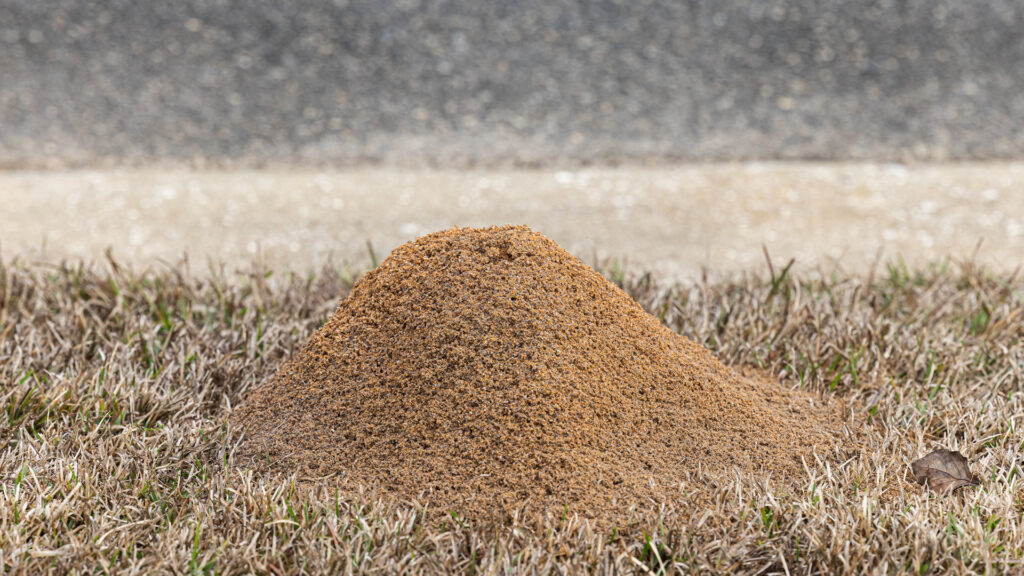
Fire ants skip the wood entirely and go straight for open, sunny soil. If you’re trying to find an ant colony in your yard before it finds you, the mound is usually the giveaway. A typical fire ant mound can be as small as a dinner plate or as wide as a car tire, standing anywhere from shin-high to knee-high, and it won’t have an obvious hole in the center the way most people expect. Underground tunnels can run 25 feet or more from the mound, so ants showing up well away from any visible pile doesn’t mean there isn’t one close by.
How to Identify a Fire Ant Mound
A fresh mound looks loose and crumbly, like a pile of dirt that hasn’t settled yet. Step on one, even lightly, and ants pour out of the tunnel network within seconds instead of the single entrance most people picture. That reaction alone is often the first real clue a homeowner has that they’re dealing with fire ants and not some other yard ant.
Bites, Stings, and When to Call a Professional
This part matters more than the identification does. Carpenter ants can bite if you handle one directly, but that’s just pressure from their jaws, no venom behind it, so it rarely amounts to more than a pinch. They don’t sting, and they show little interest in defending territory against a person just standing nearby. Carpenter ants damage your house. The venom behind a fire ant’s sting is what does real damage to a person, and a carpenter ant’s bite doesn’t come with that.
What a Fire Ant Sting Feels Like

Fire ants sting, and they do it as a group. A disturbed mound sends ants up whatever’s nearby, and each one bites to get a grip before stinging repeatedly with venom that causes an immediate burning sensation. Within a day, that sting site usually turns into a small white blister. Roughly 1 out of 200 people have a serious allergic reaction to that venom, and knowing how to protect kids and pets from a mound matters just as much as calling us about it.
A few situations tend to push either ant from a nuisance into something that needs professional attention:
- If mowing, digging, or foot traffic disturbs a mound, expect a fast and aggressive response
- Winged ants swarming indoors when a new generation leaves the nest to start colonies of its own, a scene easy to mistake for a termite swarm
- A nest sitting close enough to a doorway or patio that avoiding it isn’t realistic
- Sawdust-like debris or hollow-sounding wood that keeps reappearing after you clean it up
We’ve already busted most of the home remedies people try on fire ant mounds, and none of them reach the queen, the one ant running the colony, sitting several feet underground. Store-bought sprays might kill the ants you can see on the surface. A fire ant colony can run tens of thousands of ants deep underground, and a carpenter ant nest hidden inside a wall stays active long after the visible ants disappear. Both need treatment that reaches the colony underground, where the queen and the rest of the population live. That’s the difference between a single spray and ongoing ant control.
Call Scout’s Pest Control
If you’ve found a mound in the yard or heard something moving inside a wall, we’d rather take a look now than after it’s spread further. Call us at 864-469-4999, or reach out through our residential pest control page, and we’ll figure out which ant you’re dealing with and what it will take to handle it. We serve homeowners across the Upstate, including:
- Anderson, SC
- Belton, SC
- Clemson, SC
- Duncan, SC
- Easley, SC
- Five Forks, SC
- Fountain Inn, SC
- Gray Court, SC
- Greenville, SC
- Greer, SC
- Iva, SC
- Laurens, SC
- Lyman, SC
- Mauldin, SC
- Oconee County, SC
- Pickens, SC
- Piedmont, SC
- Simpsonville, SC
- Six Mile, SC
- Spartanburg, SC
- Taylors, SC
- Townville, SC
- Travelers Rest, SC
- Williamston, SC
- Woodruff, SC